China Best High Temp Cable Manufacturer for Global Buyers

China Best High Temp Cable Manufacturer for Global Buyers

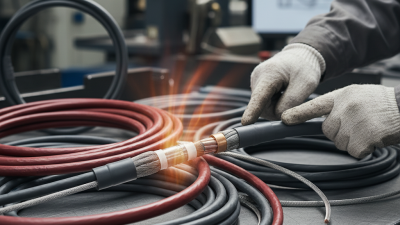
Choosing a high temp cable manufacturer requires more than comparing prices or browsing attractive product photos. Global buyers need evidence of material quality, temperature ratings, testing discipline, and stable production. A cable that survives 250°C in a laboratory may perform differently beside a vibrating engine, furnace door, or chemical processing line.

Electrical engineering professor Dr. George G. Karady offers a useful reminder: “Reliability begins with understanding the environment, not merely selecting the component.” This principle shapes our evaluation of China’s high temp cable manufacturers. Strong suppliers identify the actual operating temperature, voltage, bending radius, flame exposure, oil contact, and installation pressure before recommending a design.

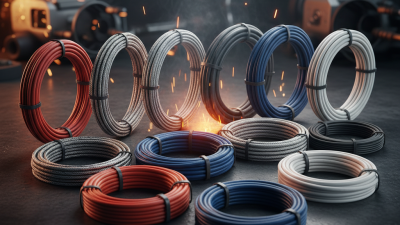
Look closely at insulation materials. Silicone rubber offers flexibility. PTFE supports chemical resistance and clean processing environments. Fiberglass braiding can add mechanical protection, but it may require careful handling during installation. Ceramic fiber can tolerate extreme heat, yet it may sacrifice flexibility. The right answer depends on the application.

Factory experience matters.

A dependable manufacturer should provide batch records, conductor specifications, temperature test results, and clear quality procedures. Certifications help, but they do not replace technical communication or sample testing. Buyers should request production samples and inspect them under realistic conditions.

No supplier is perfect. Even experienced factories can miss details when specifications remain vague. That is why this guide examines product construction, customization ability, testing capacity, export experience, and after-sales support. The goal is practical selection, not exaggerated promotion. A high temp cable should work reliably when the surrounding equipment becomes hot, crowded, and difficult to access.
China Best High Temp Cable Manufacturer for Global Buyers

High-Temperature Cable Fundamentals: 200–260°C Ratings and Insulation Materials

China Best High Temp Cable Manufacturer for Global Buyers

High-Temperature Cable Fundamentals: 200–260°C Ratings and Insulation Materials

High-temperature cable selection begins with the real operating temperature, not the advertised maximum. A 260°C rating may describe short-term exposure, while continuous service requires a safety margin. PTFE insulation commonly supports demanding temperatures near 260°C and resists oils, chemicals, and moisture. FEP offers useful chemical resistance but often suits lower continuous temperatures. Silicone remains flexible, although its typical limit is closer to 180–200°C. Fiberglass-braided constructions can improve heat protection, but the complete cable system sets the final rating.

For global buyers, request test reports, conductor details, insulation thickness, and continuous-temperature data. Nickel-plated copper can reduce oxidation in heated environments. However, plating alone does not solve mechanical stress. Check bending cycles, voltage rating, flame behavior, and outer-jacket performance. Installation experience shows that heat near connectors often causes earlier failure than heat along the cable. This point is easy to overlook. Ask whether testing covered the finished assembly, not only the insulation material.

Tips: Measure the hottest surface directly. Leave a temperature margin. Confirm short-term and continuous ratings separately. Review batch traceability and sample records before ordering. A cable can pass a laboratory test yet fail after repeated bending, vibration, or tight routing. That possibility deserves honest evaluation.
China Manufacturer Standards: IEC 60228, IEC 60332, and ISO 9001 Compliance

China’s high temperature cable sector is gaining attention as grid investment accelerates. The International Energy Agency reported that global electricity grids may require 80 million kilometres of new or refurbished lines by 2040. For global buyers, compliance evidence matters more than attractive specifications.

IEC 60228 defines conductor classes, dimensions, and resistance requirements. It does not confirm a cable’s maximum operating temperature. That rating depends on insulation materials, construction, and verified testing. IEC 60332 evaluates flame propagation under specified conditions. It does not automatically prove fire resistance or circuit integrity. A reliable Chinese manufacturer should provide batch traceability, conductor resistance results, insulation test records, and clear temperature data.

ISO 9001 supports controlled purchasing, production, inspection, and corrective action. The ISO Survey 2023 recorded more than 1.26 million ISO 9001 certificates worldwide, showing its broad adoption. Yet certification alone is not enough. It can describe a management system, not every cable’s performance. Buyers should review the certificate scope and audit validity.

Factory experience becomes visible in small details. Labels should match test reports. Reel numbers should remain traceable. Samples should reflect normal production, not only laboratory preparation. Some suppliers still present IEC 60332 as complete fire protection, which is an important misunderstanding. Standards help, but careful verification remains necessary. I would also question any supplier promising “high temperature” without stating the conductor temperature, test method, and service environment.

Cable Selection Data: Voltage, Conductor Size, Shielding, and Bend Radius

China Best High Temp Cable Manufacturer for Global Buyers

Cable Selection Data: Voltage, Conductor Size, Shielding, and Bend Radius

Selecting a high-temperature cable starts with voltage, not temperature alone. IEC 60502-1 covers fixed-installation cables rated at 1 kV and 3 kV. Higher-voltage systems require different insulation tests, clearances, and construction. Do not select by headline temperature. A 1,000°C claim may describe short exposure, not continuous operation. Check the rated conductor temperature, ambient temperature, and emergency overload time.

Conductor size affects current capacity, voltage drop, and heat release. IEC 60228 defines conductor classes and nominal cross-sectional areas, including flexible Class 5 and Class 6 conductors. A larger conductor usually lowers resistance, but it also increases weight and bending force. Calculate current using the actual installation method. Tray spacing, surrounding heat, and grouping can reduce ampacity sharply. Small detail, big failure.

Shielding should match the interference risk. Braided shields support flexibility, while foil shields can improve high-frequency coverage when properly grounded. IEC 61000-5-2 provides useful guidance for cable shielding and bonding. Bend radius needs equal attention. Many designs specify a minimum radius between four and twelve times the overall cable diameter, but this is not universal. Dynamic movement needs a larger radius than fixed routing. A neat datasheet can still mislead. Confirm repeated-flex testing, shield termination, and the cold-state bend radius before approving production.

China Best High Temp Cable Manufacturer for Global Buyers - Cable Selection Data: Voltage, Conductor Size, Shielding, and Bend Radius
Application Category Typical Operating Temperature Rated Voltage Conductor Size Typical Conductor Construction Shielding Option Minimum Bend Radius Typical Insulation / Jacket Common Selection Considerations
High-temperature internal wiring −60 to +180°C 300/500 V 0.5–2.5 mm² Fine-stranded tinned copper Optional tinned copper braid 6–8 × cable OD Silicone rubber Suitable for control panels, heating equipment, lighting, and general appliance wiring where flexibility is required.
Industrial power and control −60 to +200°C 600/1000 V 1.5–16 mm² Stranded tinned or nickel-plated copper Overall copper braid or aluminum/polyester foil with drain wire 8–10 × cable OD Silicone or fluoropolymer insulation Choose the conductor area from the allowable current, installation method, ambient temperature, and permissible voltage drop.
Thermocouple extension and sensor cable −60 to +200°C 300/500 V 0.22–1.0 mm² Thermocouple alloy or tinned copper, depending on circuit type Overall copper braid, foil shield, or both 6–10 × cable OD Fiberglass, silicone, or fluoropolymer Use matching thermocouple materials and polarity; shielding helps reduce electromagnetic interference in low-level measurement circuits.
High-flex motion cable −40 to +180°C 300/500 V 0.14–6.0 mm² Extra-fine stranded copper with high-flex lay Individual pair shields or overall braid 10–15 × cable OD High-flex silicone or fluoropolymer For repeated movement, the dynamic bend radius is more critical than the static installation radius; verify the machine manufacturer’s cycle requirements.
High-temperature motor lead −60 to +200°C 600/1000 V 2.5–35 mm² Stranded nickel-plated copper Usually unshielded; braid available for EMI control 8–10 × cable OD Silicone, fiberglass braid, or fluoropolymer Confirm motor terminal temperature, current loading, short-circuit withstand, and compatibility with varnish, oil, and vibration.
Furnace and radiant-heat wiring −60 to +250°C 300/500 V 0.75–6.0 mm² Nickel-plated copper or nickel conductor Stainless-steel braid or fiberglass braid 10–12 × cable OD PTFE, PFA, fiberglass, or ceramic-fiber construction Keep the cable away from direct flame and radiant heat unless the complete assembly is specifically rated for that exposure.
Chemical and oil-resistant wiring −55 to +200°C 600/1000 V 0.5–10 mm² Stranded nickel-plated copper Overall tinned copper braid or foil/braid combination 8–12 × cable OD PTFE, FEP, PFA, or ETFE Fluoropolymer insulation provides strong resistance to many oils and chemicals, but the exact chemical compatibility must be checked before selection.
Aerospace and compact equipment wiring −65 to +200°C 600/1000 V 0.14–2.5 mm² Silver-plated copper or nickel-plated copper Silver-plated copper braid or foil/braid shield 6–8 × cable OD PTFE, FEP, or ETFE Prioritize low weight, small outside diameter, dielectric performance, arc resistance, and compliance with the applicable aerospace or equipment specification.
High-voltage heater and ignition circuit −60 to +260°C 1.5–5 kV 0.5–4.0 mm² Stranded nickel-plated copper Optional braid, depending on EMI and safety requirements 10–15 × cable OD Silicone, PTFE, PFA, or fiberglass-reinforced construction Verify insulation thickness, partial-discharge performance, creepage, clearance, impulse voltage, and the complete system’s high-voltage test requirements.
Mineral-insulated metal-sheathed cable Up to +600°C or higher, design-dependent 300/500 V to 600/1000 V Typically 0.5–10 mm² Solid or stranded copper conductor inside compact mineral insulation Metal sheath provides mechanical protection and shielding 12–20 × cable OD Magnesium oxide insulation with copper or stainless-steel sheath Excellent temperature and fire performance; installation requires careful handling because excessive bending can damage the sheath or insulation.
Note: The values above are typical engineering selection ranges rather than universal product ratings. Final cable selection should be verified against conductor ampacity, ambient temperature, installation method, voltage-drop limits, chemical exposure, flame requirements, applicable standards, and the manufacturer’s tested datasheet.

Factory Quality Control: Type Testing, Traceability, and 1,000 V Performance

High-temperature cable buyers need more than a catalogue temperature. The IEA Electricity 2024 report projects global electricity demand to grow 3.4% annually through 2026. This growth increases pressure on cable factories and inspection systems.

At a controlled factory, type testing should verify the complete cable design, not one attractive sample. For a 1,000 V cable, inspectors review conductor resistance, insulation resistance, withstand voltage, thermal aging, and flame behavior. IEC 60502-1 covers power cables with rated voltages up to 1 kV.

Test reports should identify sample construction, aging temperature, test duration, instruments, and acceptance limits. Small details matter. A missing calibration date weakens confidence.

Traceability starts with the incoming material reel. Each batch should link conductor material, insulation compound, extrusion line, operator, production time, and final test results. A reel number and digital inspection file can support this chain.

Before shipment, buyers should request evidence of 1,000 V voltage testing. The test temperature must match the declared service range. The IEA Renewables 2024 report expects renewable capacity to expand by 5,500 GW during 2024–2030, increasing demand for consistent cable quality. Yet paperwork is not performance. Factories should retain samples and investigate borderline results openly. Quality control is never perfectly smooth.

Global Buyer Guide: MOQ, Lead Time, Incoterms, and Export Certification

China Best High Temp Cable Manufacturer for Global Buyers

Global Buyer Guide: MOQ, Lead Time, Incoterms, and Export Certification

A reliable sourcing process starts with a detailed cable specification. State the conductor size, insulation material, temperature rating, voltage, color, and required length. High-temperature applications may need silicone, PTFE, fiberglass, or another engineered insulation. Confirm the working temperature, not only the short-term peak.

MOQ can vary by construction, tooling, and raw material availability. A practical buyer should request separate pricing for samples, pilot orders, and full production. Low MOQ sounds convenient. Yet, it may increase unit cost or limit customization. Sample lead time often takes seven to fifteen working days, while bulk production may require three to eight weeks. Confirm whether testing time is included. Delays sometimes begin with an incomplete drawing.

Incoterms must match your logistics capability. FOB can offer better freight control, while DAP simplifies delivery but may increase landed costs. Ask for packaging dimensions, gross weight, HS code, and shipment photos before dispatch. Export documents should match the destination country. Depending on the market, buyers may need a commercial invoice, packing list, certificate of origin, RoHS or REACH evidence, and applicable IEC, UL, or CSA test reports. CE-related requirements should be checked carefully, because not every cable needs the same conformity route. Review factory test records, material traceability, and temperature-aging results. A polished certificate is not enough.